SQL Sink
updatable
The sink will write the result to the database.
Properties
| Property name | Optional | Description |
|---|---|---|
| Server Address | false | The url of the target database |
| Table Name | false | The table name of the database |
| Tag Fields | true | The fields to be inserted to. The result map and the database should both have these fields. If not specified, all fields in the result map will be inserted. |
Other common sink properties are supported. Please refer to the sink common properties for more information.
Database Connection Address
Database connection address reference:
| database | url sample |
|---|---|
| mysql | mysql://username:password@127.0.0.1:3306/testdb |
| sql server | sqlserver://username:password@127.0.0.1:1433/testdb |
| postgres | postgres://username:password@127.0.0.1:5432/testdb |
| oracle | oracle://username:password@127.0.0.1:1521/testdb |
| sqlite | sqlite:/tmp/test.db |
TIP
Some PG servers (especially those that are not configured with SSL) will directly reject the request to "try to SSL connect", and throw an error of pq: SSL is not enabled on the server. At this time, the PostgreSQL database connection address needs to add the sslmode=disable parameter. That is, postgres://username:password@127.0.0.1:5432/testdb?sslmode=disable
Sample
The following is an example of writing device data collected by the data collection module into a MySQL database.
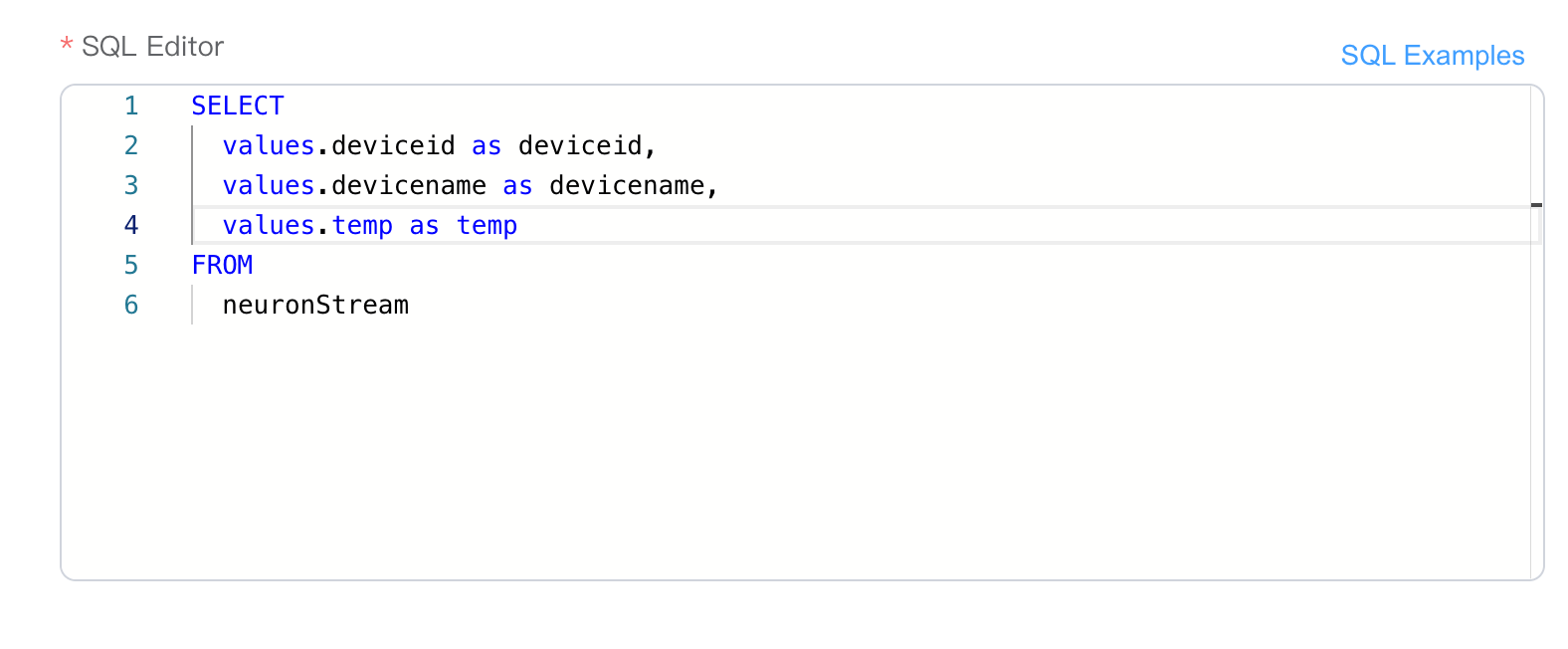
- Filter the points that need to be stored in MySQL in the SQL editor:
deviceid,devicename,temp
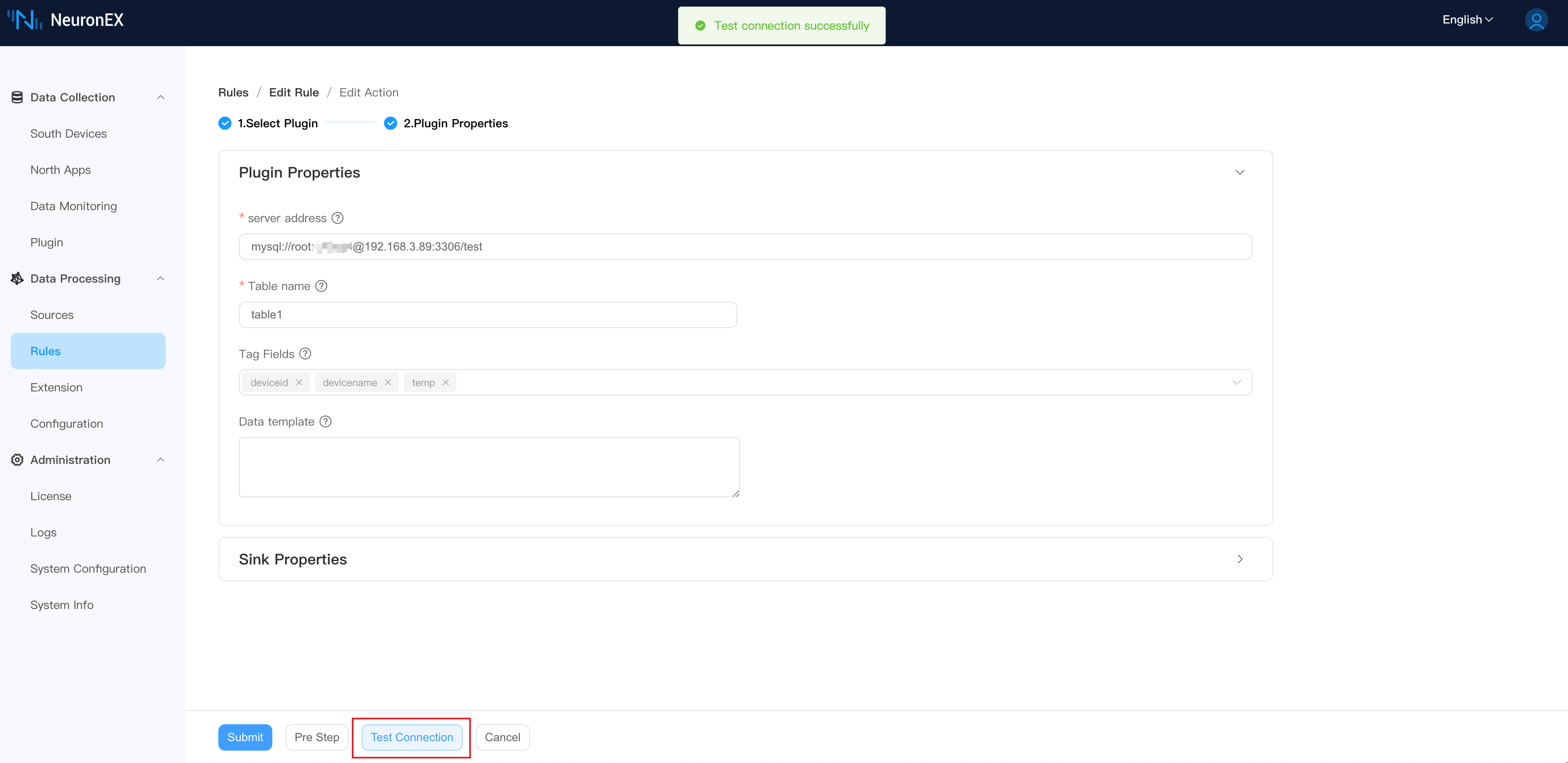
- Add SQL Sink action
- Click the
Test Connectionbutton to test the database connection status - Write
deviceid,devicename,tempdata into tabletable1of MySQL databasetest.
- Click the
TIP
Table table1 needs to be created in advance in the MySQL database, and fields with the same column names deviceid, devicename, and temp exist, and the data types must be consistent.