Skip to content

GPT-Realtime Overview

GPT-Realtime is a multimodal, real-time model developed by OpenAI that can receive live voice input and generate voice output in real time. It is trained on large-scale speech datasets and is designed to align closely with natural human conversational patterns.

Key characteristics include:

  • Protocols: Supports WebRTC, WebSocket, and SIP. It can process text and speech inputs in real time and stream responses continuously.
  • Conversation experience: Low latency, natural and fluent speech synthesis, and robust handling of multiple interruptions during a conversation, closely resembling human dialogue.
  • Function calling and tools: Supports function calling and MCP tools.
  • Developer experience: For WebRTC integration, it offers two levels of integration:
    • Voice Agents SDK: Higher-level abstractions with out-of-the-box capabilities.
    • WebRTC SDK: Lower-level audio/video transport with greater flexibility and customization.

Traditional RTC Real-Time Voice Pipelines with Multiple Models

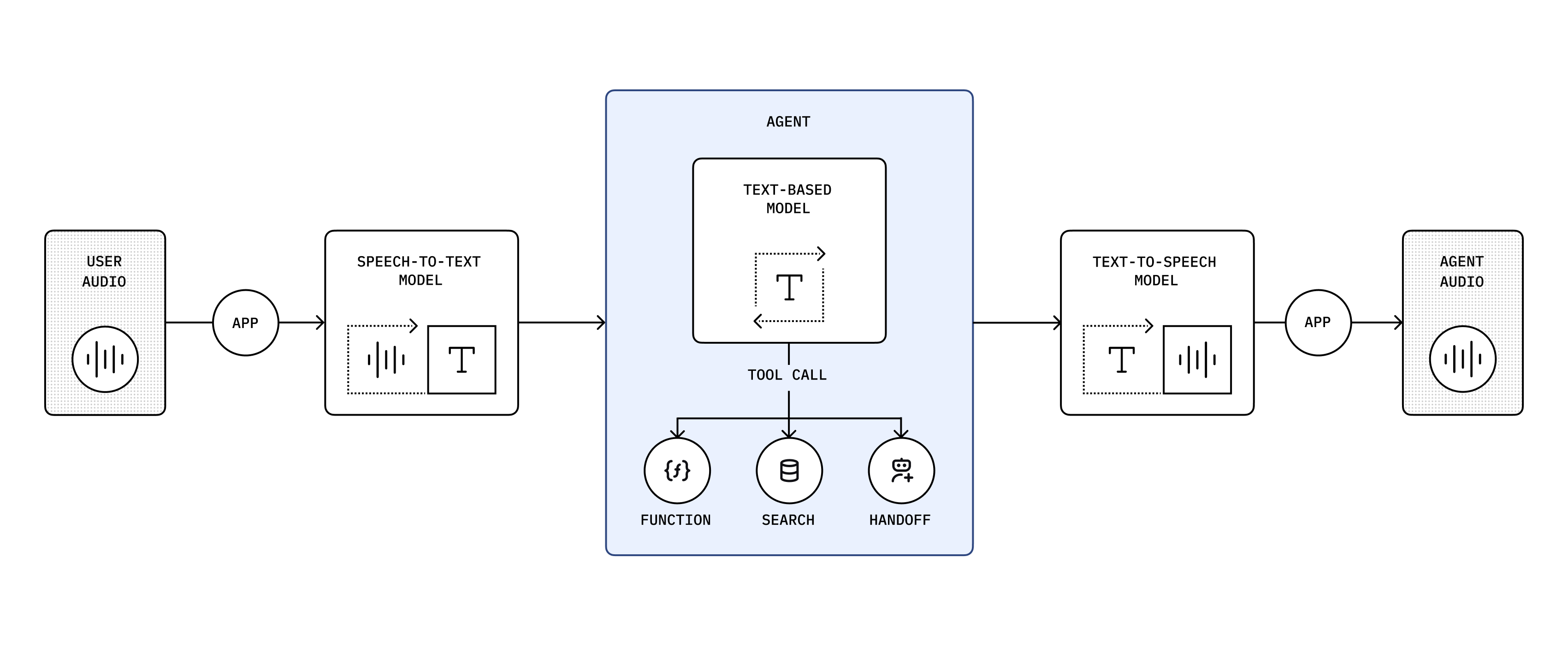
In traditional RTC real-time voice solutions, multiple types of models are typically chained together to enable voice interaction: speech is first transcribed into text, then processed by a large language model, and finally synthesized back into speech and streamed to the user.

traditional models pipeline

GPT-Realtime: Unified Capabilities in a Single Model

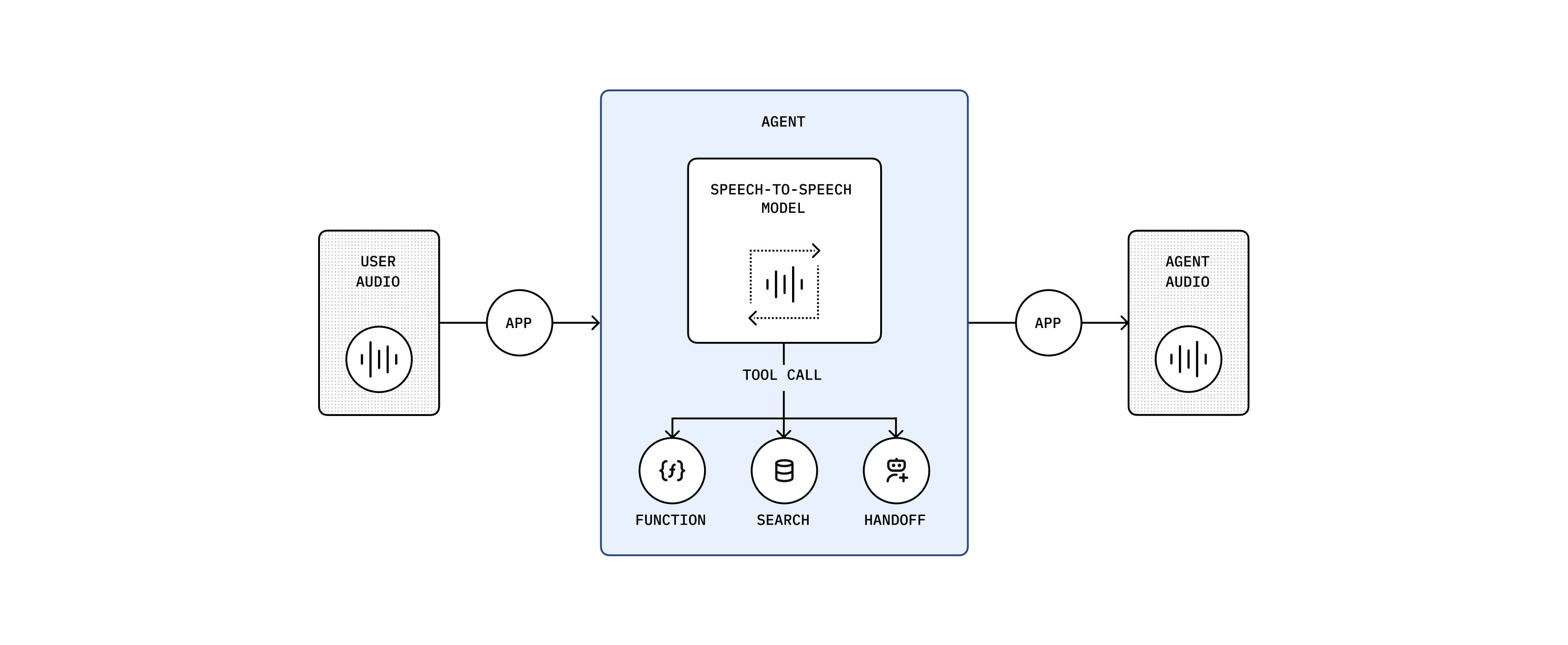
GPT-Realtime eliminates the need to chain multiple model types. The entire speech-to-speech process is handled within a single model, resulting in significantly lower end-to-end latency.

GPT-Realtime